
Contenido de la página
PalancaOfficial Disc Golf Rules: Simplified Version for Beginners
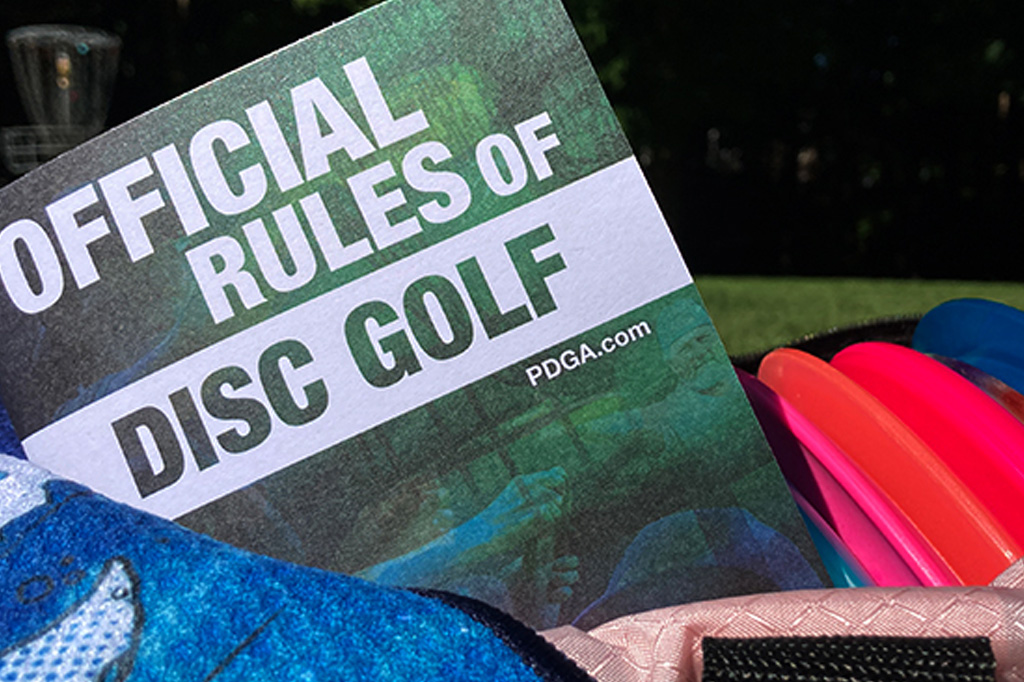
Disc golf follows a simple yet precise set of rules established by the Professional Disc Golf Association (PDGA). While the official rulebook can be detailed, this guide breaks down the essential rules every beginner needs to know to play correctly, confidently, and respectfully. Understanding these fundamentals will help you avoid common mistakes and ensure a great experience on the course.
The Absolute Basics: Objective and Equipment
The objective of golf de disco is identical to traditional golf: complete each hole in the fewest number of throws (strokes).
- The Course: A disc golf course consists of a series of “holes.” Each hole has a tee area to start from and a target, called a “cesta,” to finish on.
- The Equipment: Players use specialized flying discs. While you can start with a simple set like the Conjunto para principiantes Yikun (GUI putter, SI gama media, conductor HU), it’s important to use discs that are PDGA-approved for weight and size if you plan to play in sanctioned events.
Rule #1: Starting the Hole – The Tee Throw
The play for each hole begins from the tee area.
- The Tee Area: This is a designated, usually marked, area from which you make your first throw. You must have at least one supporting point (foot) in contact with the surface within the tee area when you release the disc. You cannot step past the front of the tee area until the disc is released.
- Throwing Order: On the first hole, the order of play is often decided by a random method like flipping a disc. On subsequent holes, the player with the lowest score on the previous hole throws first.
Rule #2: The Lie – Where You Throw From Next
After your tee throw, you throw from behind the spot where your previous throw landed. This spot is called the “lie.”
- Marking Your Lie: You must mark your lie before throwing. There are two common ways:
- Using a Mini Marker Disc: Place a small mini disc directly in front of your disc on the playing surface. You then throw from behind your mini marker. This is the standard method in formal play.
- Using the Disc Itself: You may use the thrown disc itself as your marker. In this case, you must throw from directly behind the rear edge of your disc that is on the playing surface.
- Your Stance: When making a throw, you must have at least one supporting point (foot) in contact with the playing surface on the lie(directly behind your marker). No supporting point can be closer to the hole than the rear edge of your marker until after you release the disc.
Rule #3: Fairway Throws – Playing It Where It Lies
A fundamental principle in disc golf is that you play your disc from where it comes to rest. You cannot move your disc to a better spot or remove obstacles (like trees or bushes) that are in your way.
- Out-of-Bounds (OB): Areas outside the intended playing field are marked as Out-of-Bounds (OB). Common OB areas include roads, sidewalks, peligros del agua (like deep ponds), and private property. If your disc comes to rest completely OB, you receive a one-throw penalty.
- How to Proceed from OB: You play your next shot from a designated “drop zone” or from your previous lie (with the penalty stroke added), depending on the course rules for that specific OB area.
Rule #4: The Putting Green (The Circle)
A special rule applies to throws made within 10 medidores (approximately 33 pies) of the basket. This area is often called “The Circle” or “The Green.”
- The 10-Meter Rule: When your lie is within 10 meters of the basket, you must not advance your supporting point (foot) closer to the hole until the disc comes to rest in the basket or on the ground. In simple terms, you cannot “jump putt” or fall forward toward the basket. You must demonstrate balance and control after releasing the disc.
- Why This Rule Exists: It prevents players from gaining an unfair advantage by lunging at the basket from a close range, ensuring putting remains a skill of accuracy and control.
Rule #5: Completing the Hole
A hole is completed when your disc comes to rest in the basket, specifically supported by the chains or the basket itself.
- What Counts: The disc must be at restin the basket. If it hits the chains and falls out, it does not count. If it goes in and then spits back out, it does not count. Your lie for the next throw is then on the ground directly below where the disc first entered the target.
- Error común: Do not remove your disc from the basket until all players in your group have completed the hole.
Rule #6: Common Penalties and How to Avoid Them
Understanding penalties is key to keeping an honest score.
| Penalty Situation | Result | How to Avoid It |
|---|---|---|
| Throwing from the Wrong Lie | 1-throw penalty | Always mark your lie carefully before each throw. |
| Out-of-Bounds (OB) | 1-throw penalty | Know the course’s OB boundaries. Play conservatively near them. |
| Missed Mandatory (Mando) | 1-throw penalty | Pay attention to signs directing you to throw around a specific tree or pole. |
| Disc Moved After Coming to Rest | 1-throw penalty | Be careful not to kick or move your disc (or another player’s disc) accidentally. |
| Violation of the 10-Meter Rule | The throw does not count, plus a 1-throw penalty. You must re-throw from your previous lie. | Practice a balanced, stationary putting style inside 10 medidores. |
Rule #7: The Most Important Rule – Etiquette and Safety
While not always a formal penalty, proper etiquette is a core part of the rules.
- Safety First: Never throw when players or park users are in your path or near where your disc might land. Yell “Fore!” loudly if a disc heads toward someone.
- Respect Other Players: Don’t talk or make unnecessary noise while others are throwing. Avoid distracting movements.
- Don’t Slow Play: Be ready to throw when it’s your turn. If a faster group is behind you, let them “play through.”
- Leave No Trace: Do not leave trash on the course. Leave the course in better condition than you found it.
Rule #8: Scoring
Scoring in golf de disco is simple: count the total number of throws for each hole.
- Par: Each hole has a “par,” which is the expected number of throws a skilled player should take to complete it.
- Keeping Score: Your score for a hole is the number of throws you took. If you take 4 throws on a par-3 hole, your score is “4” or “+1” (one over par). If you take 2 throws on a par-3, your score is “2” or “-1” (one under par).
- Total Score: Add up your scores for all holes to get your total for the round. The player with the lowest total score wins.
Quick-Start Guide: Your First Round Checklist
- Find a Course: Use an app like UDisc to locate a course.
- Start on Hole 1: Find the tee area for the first hole.
- Tee Off: Throw your disc from within the tee area.
- Find Your Disc: Walk to where your disc landed.
- Mark Your Lie: Place a mini marker or use your disc to mark the spot.
- Throw Again: Take your next throw from behind your marker.
- Repeat: Continue steps 4-6 until your disc lands in the basket.
- Count Your Throws: Remember how many throws it took you to complete the hole.
- Move to the Next Hole: Proceed to the tee area for hole 2.
Preguntas frecuentes: Common Beginner Questions
Q: What if I can’t find my disc?
A: This is called a “lost disc.” You receive a one-throw penalty. Your next throw is taken from the approximate spot where the disc was last seen (or from a drop zone if the course has one for lost discs).
Q: Can I use a different disc for each throw?
A: Sí! This is a key part of strategy. You can use a driver for your first throw, a mid-range for an approach, and a putter to finish the hole.
Q: What is a “provisional throw”?
A: If your group cannot agree on a ruling (p.ej., whether a disc was OB), you can play a second “provisional” tirar. Finish the hole with both throws and record both scores. Later, you can check the official rules to determine which score counts.
Q: Are there different rules for casual play?
A: Absolutely. While the PDGA rules provide a standard, many players adopt “casual” rules among friends, like allowing a free throw from the edge of a water hazard instead of taking a penalty. The key is that everyone in your group agrees on the rules before you start.
Conclusión: Learn by Playing
The best way to learn golf de disco rules is to play with experienced players or in a casual league. Don’t be intimidated by the rulebook. Focus on the core principles: play from the tee, play it where it lies, complete the hole by landing in the basket, and always be safe and respectful. As you play more, the finer points of the rules will become second nature. Now, grab your discs—like the versatile Yikun KUI de rango medio for the fairway and the reliable GUI de Yikun holgazanear for the green—and hit the course!
Este artículo es parte de nuestra guía completa de Disc Golf para principiantes.. Regresar a la guía principal aquí.La guía completa para principiantes de golf con disco: Todo lo que necesitas saber
Referencias
Asociación Profesional de Golf con Disco (PDGA). (2025). Reglas Oficiales del Disc Golf. Obtenido de https://www.pdga.com/rules
UDisc. (2025). Disc Golf Rules for Beginners: The Simple Version. Obtenido de https://udisc.com/blog/post/disc-golf-rules-for-beginners
Golf de disco Innova. (2025). Learn to Play: Reglas del golf de disco & Etiqueta. Obtenido de https://www.innovadiscs.com/learn-to-play
Disco de golf Asociación. (2025). A Beginner’s Guide to Disco de golf. Obtenido de https://www.discgolfassoc.com/beginner-guide