

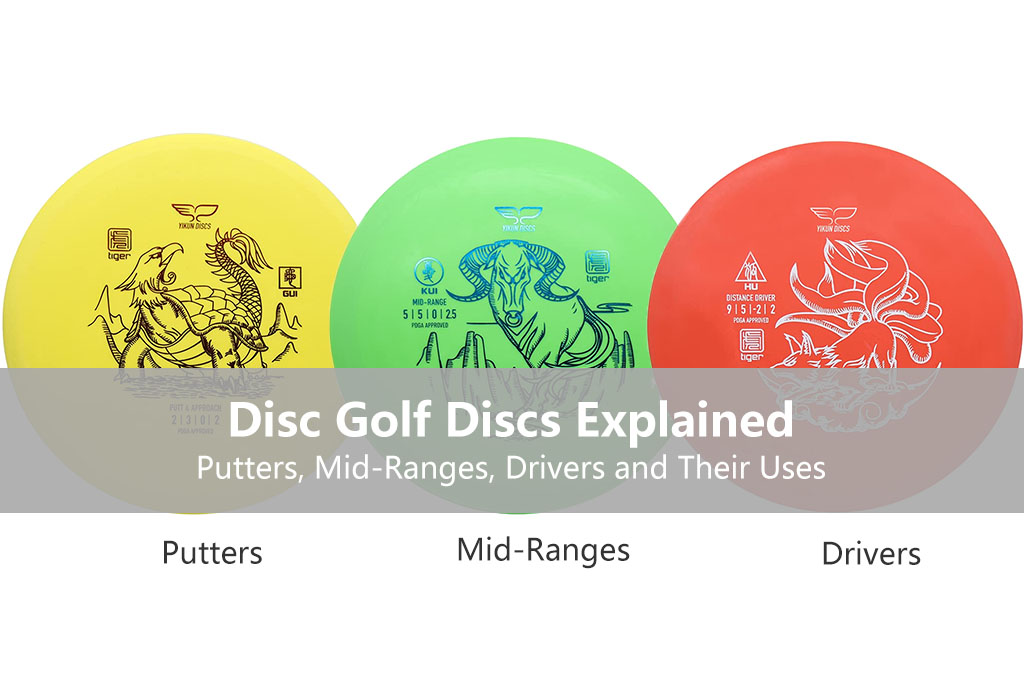
Disc Golf Discs Explained: Putters, Mid-Ranges, Drivers and Their Uses
Disc golf, like traditional golf, requires different “clubs” for different situations. Understanding the three main categories of discs—putters, mid-ranges, and drivers—is fundamental to mastering the sport. Each type is engineered with specific flight characteristics, rim designs, and purposes in mind. This guide provides a comprehensive explanation of disc golf discs, detailing their unique roles and how to leverage them effectively on the course.
The Fundamentals: How Disc Design Dictates Flight
Before diving into specific disc types, it’s crucial to understand the basic principles of disc design. All disc golf discs are characterized by four primary flight ratings, often represented by a four-number system (e.g., 3, 4, 0, 1):
- Speed: This number (1-14) indicates the rim width and sharpness. A higher speed rating means the disc requires more power to fly correctly and is generally designed for distance.
- Glide: This (1-7) measures the disc’s ability to maintain lift. Higher glide helps achieve more distance with less power.
- Turn: This number (typically -5 to +1) describes the disc’s tendency to curve to the right (for a right-handed backhand throw) during the high-speed initial phase of flight. Negative numbers mean more turn.
- Fade: This (0-5) indicates the disc’s tendency to hook left at the end of the flight due to its stability. Higher fade means a stronger finish to the left.
The combination of these ratings, along with the disc’s plastic type and weight, creates its unique flight path. Let’s explore how these principles apply to each disc category.
Putters: The Foundation of Accuracy and Control
Putters are the most crucial discs in any player’s bag, used for the majority of shots within 200 feet of the basket. They are designed for precision rather than raw distance.
Physical Characteristics:
- Rim: Putters have the bluntest and thickest rim of all disc types. They are deep and easy to grip, promoting a clean, controlled release.
- Speed: Low speed ratings, typically between 1 and 3.
- Stability: Generally very stable to neutral, meaning they fly straight with a reliable, gentle fade at the end.
Primary Uses:
- Putting: The primary use. Within the “circle” (10 meters/33 feet from the basket), players use a putting motion to land the disc in the chains. Stability and a comfortable grip are paramount.
- Approach Shots: For shots too long for a putt but too short for a mid-range (e.g., 50-150 feet). A putter can be thrown with confidence to land softly near the basket.
- Driving Off the Tee: On very short holes or tight, wooded fairways where accuracy is more important than distance, a putter is the ideal choice. It will fly straight and resist skipping away.
Example: Yikun GUI Putter
The Yikun GUI is an excellent example of a beginner-friendly and professional-grade putter. With its GRIP ZONE anti-skid area on the bottom, it provides a consistent and comfortable hold. Its flight characteristics make it stable and reliable for both putting and throwing, especially recommended for beginners developing their touch and control around the basket.
Mid-Range Discs: The Versatile Workhorses
Mid-range discs bridge the gap between putters and drivers. They are designed for controlled shots in the 200-300 foot range where accuracy is still critical, but more distance is needed than a putter can provide.
Physical Characteristics:
- Rim: Thinner and sharper than a putter but noticeably blunter than a driver. This rim design offers a balance of control and potential for distance.
- Speed: Moderate speed ratings, usually between 4 and 5.
- Stability: Available in a wide range of stabilities, but beginners should focus on straight-flying (neutral) mid-ranges.
Primary Uses:
- Controlled Fairway Shots: When a driver is too unpredictable but a putter won’t reach, a mid-range is the perfect tool for navigating fairways.
- Shaping Lines: Skilled players use mid-ranges to execute technical shots that curve around obstacles (e.g., “hyzer” and “anhyzer” shots).
- Upshots: For longer approach shots where a putter might not have enough glide or distance.
Example: Yikun KUI Mid-Range
The Yikun KUI is described as having “relatively balanced attributes.” It flies straight and finishes with a soft fade, making it an easy-to-use and well-controlled “distance approach disc.” This neutral stability is ideal for players learning to throw flat, straight shots and for navigating tight gaps on the course.
Drivers: Engineered for Maximum Distance
Drivers are designed for one primary purpose: distance. They have the sharpest rims and highest speed ratings, allowing them to cut through the air efficiently when thrown with sufficient power and proper technique.
Drivers are further subdivided into two main categories:
Fairway Drivers
These are the “control drivers,” offering a blend of manageable speed and increased distance.
- Rim: Sharper than a mid-range but not as extreme as a distance driver.
- Speed: Typically rated between 6 and 8.
- Use: Perfect for players developing arm speed. They provide more distance than a mid-range but are easier to control than high-speed drivers. They are excellent for accurate placement shots on longer holes.
Distance Drivers
These are the fastest discs, built for maximum distance off the tee.
- Rim: The sharpest and widest of all disc types.
- Speed: Rated from 9 up to 14 or higher.
- Use: Intended for open holes where maximum distance is the goal. Important Note: Beginners should avoid distance drivers until they have developed proper form and arm speed, as they will not fly as intended and can ingrain bad habits.
Example: Yikun HU Driver
The Yikun HU is a “typical distance driver with decent turn and fade.” A fade of 2 helps it maintain its flight path and control the landing point. This combination of turn and fade allows experienced players to achieve significant distance with a predictable flight pattern, “fitting multiple shapes of fairways.”
How to Choose the Right Disc for Your Skill Level
Selecting the correct disc is critical for improvement and enjoyment.
- Beginners: Start with a putter and a neutral mid-range. Focus on discs with lower speed ratings (1-5) and understable flight numbers (negative turn). These discs will fly straighter with less power and help you learn proper form. A set like the Yikun Beginner Set (GUI, KUI, HU) provides a balanced foundation.
- Intermediate Players: As your arm speed and control improve, incorporate fairway drivers. You can also explore different stabilities within the putter and mid-range categories to handle various wind conditions and shot shapes.
- Advanced/Professional Players: Your bag will include a full spectrum of discs, from multiple putting putters to a range of highly specialized drivers for specific situations (e.g., overstable drivers for headwinds, understable drivers for turnover shots).
Stability: The Key to Shot Shaping
Understanding stability—how a disc resists turning during flight—is essential.
- Overstable: Fights turnover and fades hard left at the end. Useful for fighting headwinds, achieving reliable skips, and throwing predictable hyzer shots.
- Stable/Neutral: Flies straight with a reliable, gentle fade. The best choice for learning and for straight shots.
- Understable: Has a tendency to turn to the right during high speed. Ideal for players with less power, for achieving maximum distance with a full flight (S-curve), and for throwing controlled right-turning shots (anhyzers).
Conclusion: Building a Balanced Disc Golf Bag
A well-rounded disc golf bag contains a selection of putters, mid-ranges, and drivers that cover various stabilities and shot requirements. Start with a simple setup—a putting putter, a throwing putter, a straight mid-range, and a fairway driver. As your skills evolve, you can add discs that allow you to execute more advanced shots and handle diverse course conditions.
Remember, the best disc is the one that you can throw with confidence and consistency. By understanding the roles of putters, mid-ranges, and drivers, you can make informed choices that will lower your scores and increase your enjoyment of the game.
This article is part of our comprehensive guide to Disc Golf for beginners. Return to the main guide here.The Complete Beginners Guide to Disc Golf: Everything You Need to Know
References
Professional Disc Golf Association (PDGA). (2025). Official Rules of Disc Golf & Equipment Standards. Retrieved from https://www.pdga.com/rules
Innova Disc Golf. (2025). Disc Golf Discs Explained: The Complete Guide. Retrieved from https://www.innovadiscs.com/disc-golf-discs-explained
Discraft. (2025). Learn About Discs: A Beginner’s Guide. Retrieved from https://www.discraft.com/learn
Ultiworld Disc Golf. (2025). The Anatomy of a Disc Golf Disc. Retrieved from https://ultiworld.com/disc-golf/anatomy-disc-golf-disc